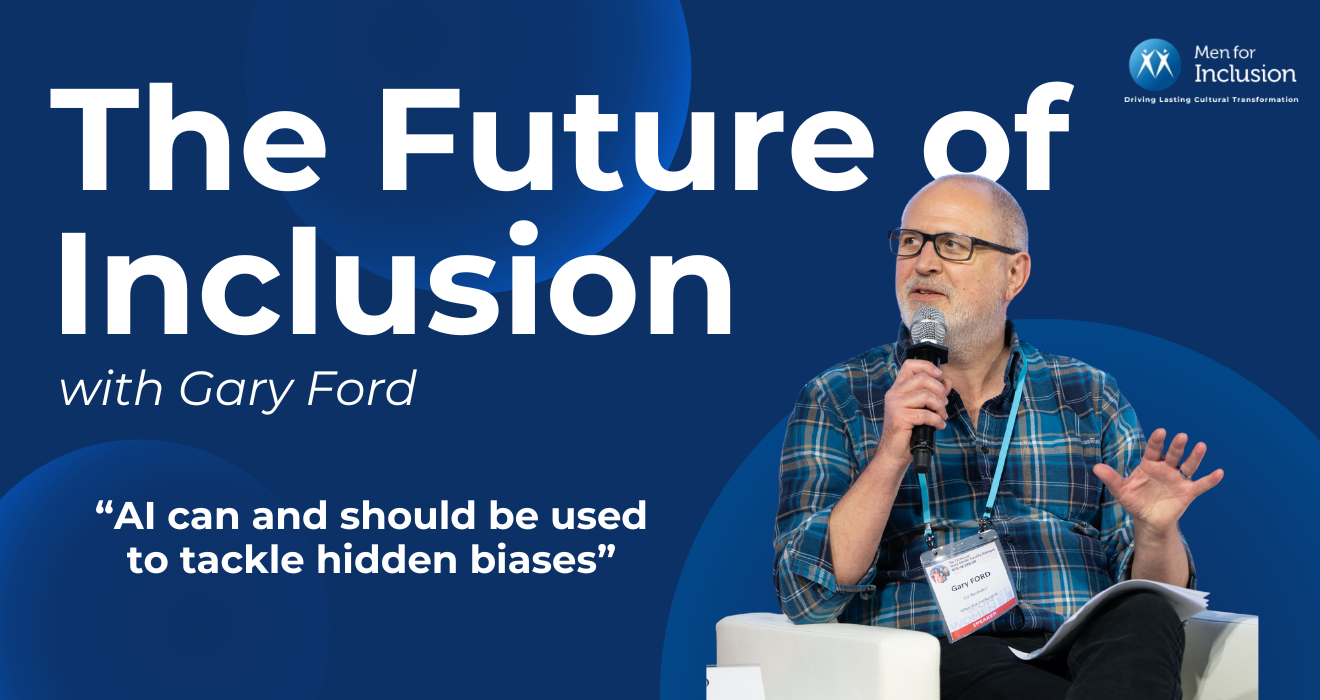
The Future of Inclusion: Using AI to Tackle Hidden Bias
The Future of Inclusion, with Gary Ford – a series about how inclusion can translate through to 2026, with modern technology and modern ways of doing things. Today’s post looks at how AI can be used for the greater good of companies – and some of the risks involved too.
Only a decade or so ago, Artificial Intelligence (AI) was considered the stuff of science-fiction novels, often with a morality message lying beneath. But today, in 2026, this once-futuristic concept is becoming more and more embedded in how we recruit, communicate, analyse and engage. As with any powerful tool, the question is not just what it can do, but how we choose to use it.
When it comes to inclusion, AI presents both a risk and an opportunity. Used carelessly, it can reinforce the very biases we are trying to dismantle. Used thoughtfully, it can help organisations identify blind spots, challenge ingrained behaviours and create more equitable environments.
It is also worth noting that the biases that have always existed within the workplace are usually invisible; when we make a biased decision, the inputs (or data) that led to that decision are often not clearly identifiable. For example, we often make decisions on “gut-instinct” or without due consideration of how we have reached a decision.
When AI makes a decision, we can often find the data it used to arrive at that making that judgement. I realise that this could become more difficult as models become complex, with greater self-learning algorithms, but the opportunity for transparency, a key element of inclusion, should be greatly enhanced.
For those working in AI-led areas of business, as they fully understand the implications of implementing AI at scale, they are already realising the importance of deliberate “human in the loop” capabilities within the newly refreshed business processes. Hence, there is a real opportunity to get this right by design.
The reality is this: most exclusion in the workplace is not overt. It is subtle, habitual and often unintended. What we might call “accidental sexism” continues to show up in everyday decisions: who gets interrupted in meetings, how job descriptions are worded, which voices are amplified and which are quietly sidelined.
This is where AI can play a meaningful role.
Catching what we don’t see
One of the simplest but most effective applications of AI is language analysis. Tools can now scan internal communications, job adverts and social media content for gender-coded or exclusionary language.
For example, job descriptions often include words like “dominant” or “competitive,” which research by Duke University showed can deter female applicants. An AI-powered checker can flag these patterns in real time and suggest more inclusive alternatives. This doesn’t remove human decision-making, but enhances it by making unconscious bias visible.
Similarly, AI moderation tools on social media platforms can be trained to detect misogynistic language, harassment or exclusionary rhetoric. While no system is perfect, these tools can significantly reduce the visibility and spread of harmful content by flagging or removing accounts that repeatedly violate standards. Importantly, they can also identify more subtle patterns; language that may not be overtly abusive but still reinforces harmful stereotypes.
More specifically, perhaps we could look at AI to help us understand the language we use personally – for example, does our language subtly change when we email women versus men or British colleagues versus American, Indian or European. With the right prompts, it could tell us how equitably we include everyone in our team.
Addressing everyday workplace bias
Beyond language, AI can help surface behavioural patterns that often go unnoticed.
If we look at meetings, AI-powered transcription and analysis tools can track who speaks, for how long and where interruptions happen. Over time, this data can reveal consistent imbalances – for example, if women are interrupted more frequently or given less airtime. This is not about policing conversations, but about providing objective insight that leaders can act on.
Performance reviews are another area ripe for intervention. Studies have shown that feedback for women is more likely to focus on personality (“collaborative,” “supportive”) rather than achievements, while men are more often evaluated on results. AI tools can scan review language and highlight these discrepancies, prompting managers to reflect and rebalance their feedback.
Even in hiring, AI can help reduce bias by analysing language used in interviews for consistency or highlighting patterns in shortlisting decisions. However, this is also where caution is most needed, as poorly trained systems can replicate historical biases at scale.
The risks we cannot ignore
It would be naïve to present AI as a neutral or inherently positive force. AI systems learn from data, and that data reflects the world as it is, not as it should be. If left unchecked, AI can entrench existing inequalities, automate discrimination and create a false sense of objectivity.
There is also a danger of over-reliance. Inclusion is fundamentally a human responsibility. It cannot be outsourced to an algorithm. AI should never replace judgement, empathy, or accountability, but support them.
And then there is the question of trust. Employees need to understand how AI tools are being used, what data is being collected and how decisions are made. Without transparency, even well-intentioned initiatives can feel intrusive or punitive.
Using AI thoughtfully
So where does this leave us? AI should be seen as a mirror, an opportunity for self-reflection and honest assessment of the decisions we make. Its value lies in reflecting patterns back to us, ones we might otherwise miss. It can prompt better questions, not provide definitive answers.
Used appropriately and strategically, AI can:
- Highlight biased or exclusionary language before it reaches an audience
- Identify patterns of interruption or imbalance in meetings
- Flag disparities in performance feedback
- Support fairer hiring practices through pattern recognition
- Moderate online spaces to reduce harmful and prejudiced content
But these tools are only as effective as the culture surrounding them. Without a genuine commitment to inclusion, AI becomes little more than a compliance exercise.
A more inclusive future, by design
We are operating in an increasingly technological climate. The question is not whether AI will shape our workplaces: it already is. The real question is how we will shape AI in return.
In talking to those leading the way in AI, they often talk about how they oscillate between complete terror and unrestrained excitement at the crossroads we find ourselves at. AI is bringing paradigm shifts across both business and our personal lives.
For those of us who care about building inclusive cultures, we need to be active participants in shaping an AI led world – embrace the excitement, rather than succumb to the “terror”.
Inclusion does not happen by accident. It requires intention, reflection and, often, discomfort. AI can help accelerate that process by shining a light on the small, everyday behaviours that collectively create unequal environments. But it cannot do the work for us.
If we approach AI with humility, acknowledging both its limitations and its potential, we have an opportunity to use it not as a shortcut, but as a support system. A tool that helps us build workplaces where inclusion is a lived reality. And that, ultimately, is a human responsibility.
To hear more from Gary, follow him on LinkedIn here.
Read more
IMD 2025: Why it is critical to do more to support men and boys
Men for Inclusion supports new landmark report from LGBT Great