
From Allyship to Inclusive Leadership: How to Build Workplaces Where Everyone Thrives
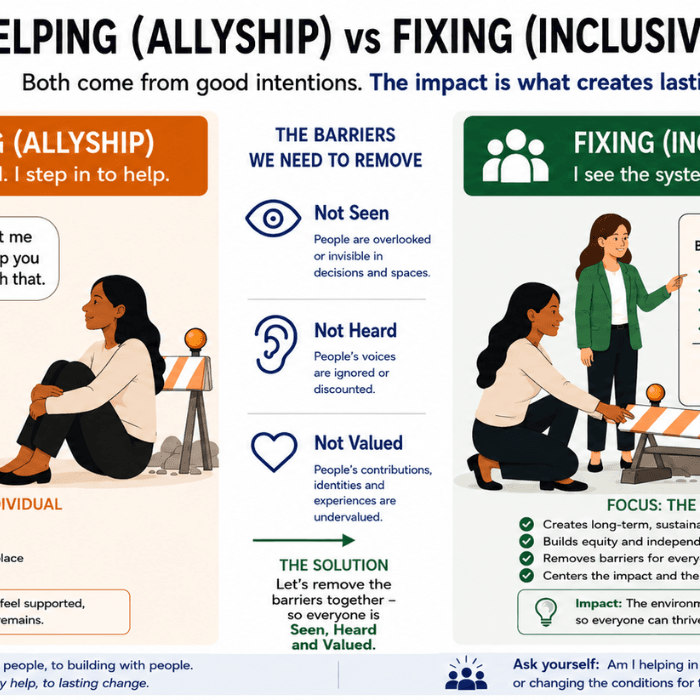
Too often, allyship work stops at helping individuals navigate broken systems.
That matters, but it’s not enough.
Allyship is important. It can provide support in the moment.
But inclusive leadership goes further: it asks why the barriers exist in the first place and works to remove them for everyone.
The shift is from:
➡️ Helping people fit into the system
to
➡️ Fixing the system so everyone can thrive.
When people don’t feel:
• Seen
• Heard
• Valued
the issue usually isn’t individual capability, it’s the environment, culture, processes, or leadership around them.
Inclusive leaders don’t just respond to exclusion.
They redesign meetings, decision-making, opportunities, behaviours, and accountability so belonging becomes part of everyday experience.
Because real inclusion isn’t measured by intentions or posts.
It’s measured by outcomes:
✅ Who gets heard
✅ Who gets opportunities
✅ Who feels safe to contribute
✅ Who thrives
Allyship may open the door.
Inclusive leadership changes the building.