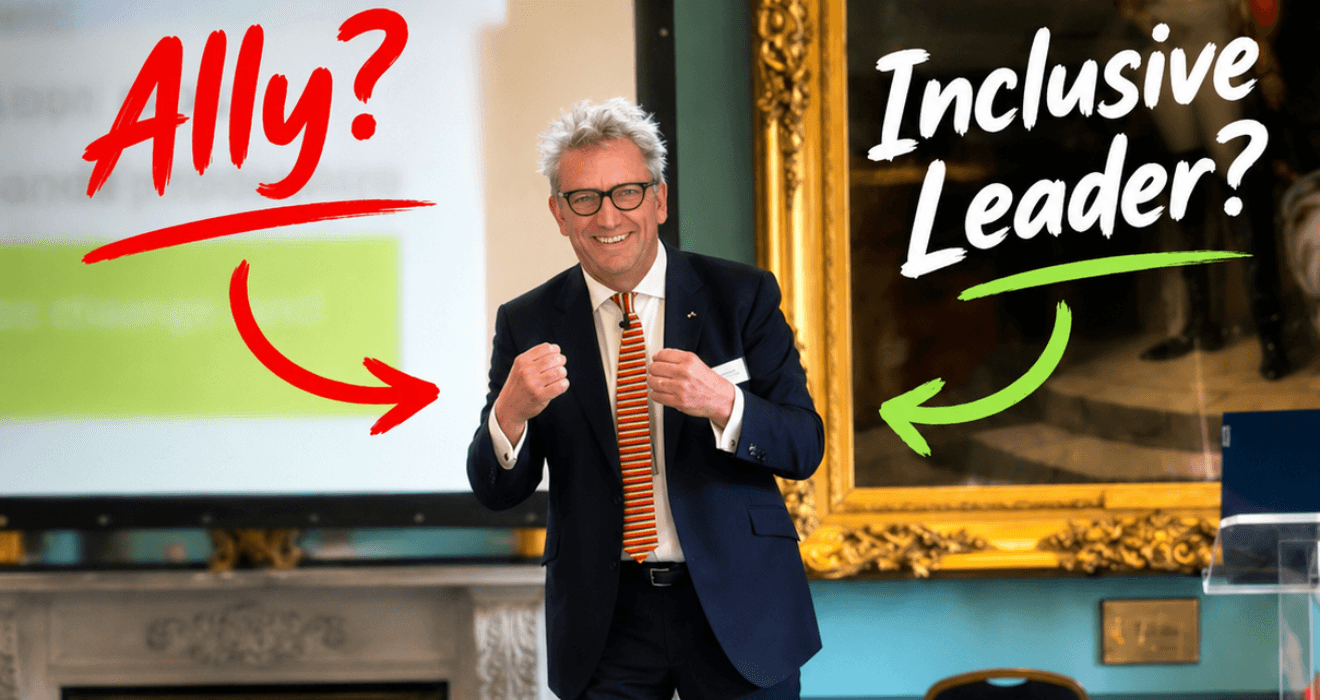
Inclusive Leadership vs Allyship: Why Great Leadership Shouldn’t Need a Label
Throughout my career, people have opened doors for me.
They’ve championed me when I wasn’t in the room.
They’ve made space for me in meetings.
They’ve backed my ideas, trusted me with opportunities and helped me progress.
I’m incredibly grateful to every one of them.
I also recognise that, as a man, I’ve enjoyed advantages that many women haven’t. It’s entirely possible that some of the people who championed me would have been labelled “allies” had I been a woman. So I ask this question with humility, knowing my experience is different.
But here’s the thing…
I have never described any of them as an ally.
I’ve simply thought of them as great leaders.
Great managers.
Great human beings doing exactly what leaders should do.
Yet I often hear women describe someone who has done exactly the same thing for them and they add another label:
“He was a great ally.”
Why?
If a leader notices talent, removes barriers, gives someone a voice, challenges unfairness and creates opportunity, why is that considered allyship rather than simply good leadership?
Have we unintentionally celebrated behaviour that should be the minimum standard?
Even more provocatively…
Do some people wear the badge of ally because it’s easier than becoming an inclusive leader?
Supporting one woman.
Mentoring one colleague.
Speaking on one panel.
Posting on LinkedIn.
Those things matter.
But they don’t necessarily change the culture.
Inclusive leadership does.
An ally can help one person over a hurdle.
An inclusive leader asks why the hurdle is there in the first place—and removes it for everyone.
So perhaps the question isn’t:
“How do we create more allies?”
Perhaps it’s:
“Why are we still treating inclusive leadership as something exceptional?”
I’m genuinely interested in other perspectives.
Is ally an important and necessary label that encourages people to step forward?
Or should we stop celebrating allyship and start expecting inclusive leadership as simply part of every leader’s job?