Why Engaging Men in Allyship Is Challenging – And Why Inclusive Leadership Matters More
I was chatting recently with a woman who leads an ERG, and she asked me a question I hear at least once a week:
“Why is it so difficult to engage men in allyship?”
So instead of jumping straight to an answer, I asked her a few questions.
“What would you actually like men to do?”
She replied:
“Support us. Speak up when things happen.”
“Like what?”
“Well… when women get interrupted in meetings and their voices aren’t heard.”
A situation many people will recognise.
Then I asked something that stopped her for a moment:
“What would motivate him to step in?”
Her first answer was:
“Because it’s the right thing to do.”
And I think this is where many organisations unintentionally lose people.
The women in the ERG often share similar experiences. They feel the frustration. They can see the patterns clearly. So naturally, they assume others see them too.
But our Cambridge research suggests the picture is more complicated.
About half of women don’t consistently recognise or experience these barriers themselves. Some even feel the answer is simply to be more assertive.
At the same time, a significant number of men do recognise the issue — often because they’ve experienced not being heard, included or valued themselves.
So when leaders hear these conversations, they’re often receiving very mixed signals.
One person says:
“This is a serious issue.”
Another says:
“I’m not sure it is.”
Someone else thinks:
“This is just DEI gone too far.”
Others simply don’t see it as a priority because they’re not experiencing it directly.
And many men quietly disconnect from the word “allyship” altogether because of the meanings, assumptions or stereotypes they associate with it.
So perhaps we need to frame the conversation differently.
What if this isn’t primarily about “men helping women”?
What if it’s about helping leaders create teams where more people can contribute fully?
Because when people don’t feel seen, heard or valued, organisations lose far more than engagement.
They lose:
ideas
innovation
challenge
different perspectives
commitment
trust
Imagine running a meeting where the same few voices dominate every discussion while quieter but highly capable people slowly disengage.
That’s not just a fairness issue.
That’s a business issue.
So instead of asking leaders:
“Will you become an ally?”
Maybe we should ask:
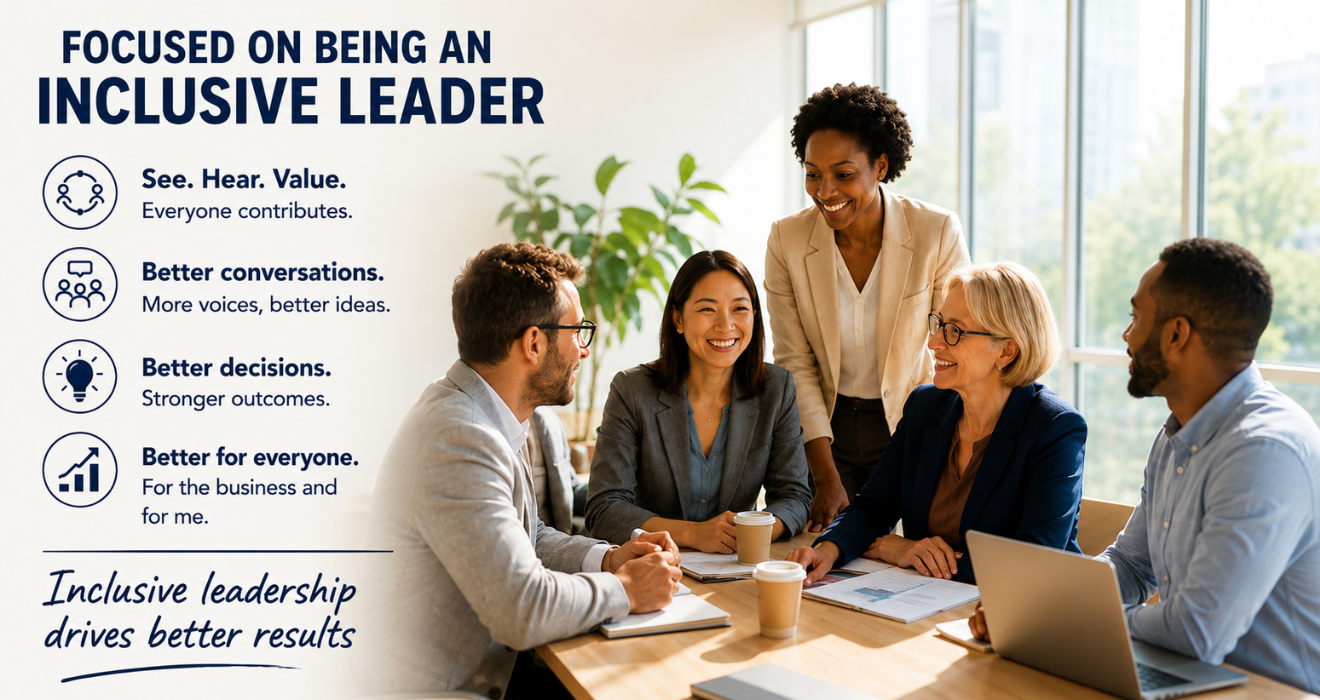
“Do you want better conversations, better decisions, better innovation and better performing teams?”
Most leaders would say yes to that immediately.
Inclusive leadership is not about rescuing people.
It’s about creating environments where more people can contribute at their best.
See people.
Hear people.
Value people.
And interestingly, when leaders start doing this well, many discover it improves their own experience too.
Less stress.
Better relationships.
Better thinking.
Better outcomes.
Maybe the challenge isn’t that people don’t care.
Maybe we simply haven’t been having the conversation in a way that enough people connect with.