Seen, Heard, Valued: Why Inclusion Matters for the Future of the Water Sector
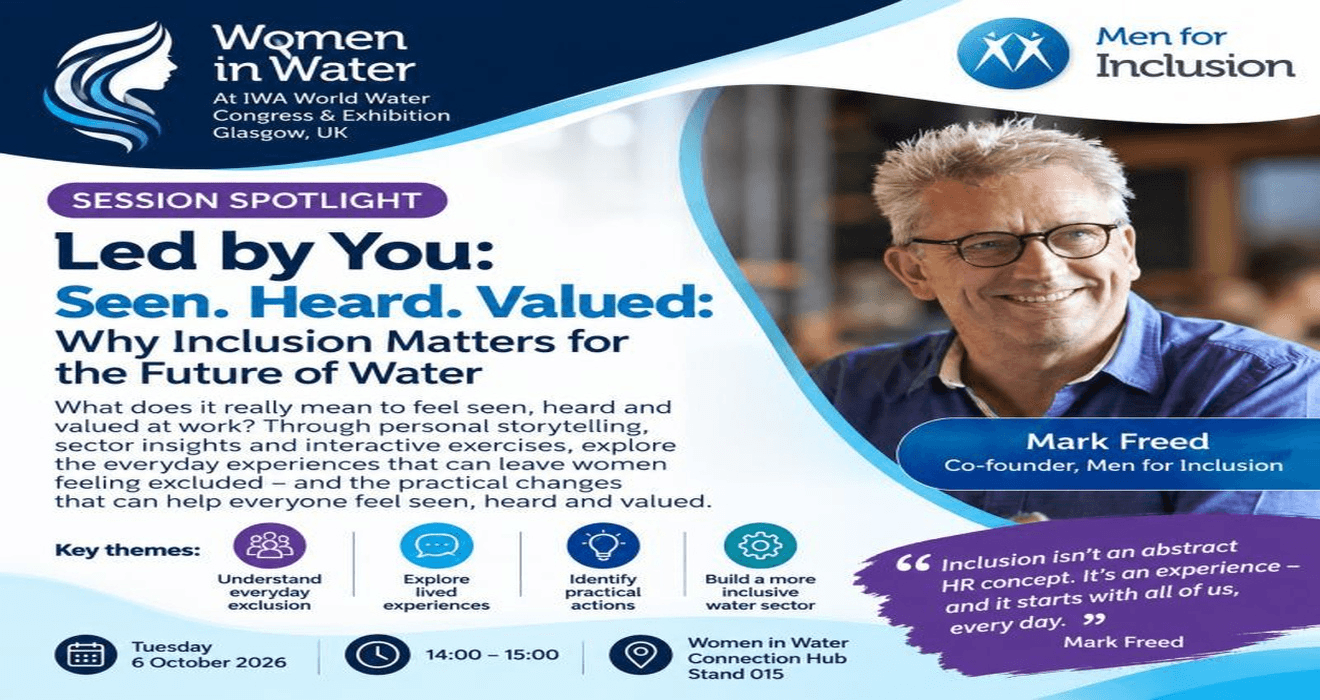
Next week, I’ll be speaking at the International Water Association Congress in Glasgow, where I’ll be joining conversations around inclusion, leadership and the future of the water sector through the Women in Water hub.
In my work with Men for Inclusion, and as an ambassador for the Women’s Utilities Network (WUN), I spend a lot of time thinking about what inclusion actually feels like in our everyday working lives.
We often talk about inclusion in terms of policies, initiatives, representation and targets. All of these have an important role to play, but inclusion ultimately comes down to something much more human.
Do people feel seen, heard and valued?
For me, these three simple words provide a useful way of thinking about what inclusion looks like in practice.
Being seen
Being seen is about more than visibility.
It means recognising people for their skills, experience, potential and contribution, rather than making assumptions based on who they are or how familiar they may feel.
It means noticing who is contributing, who might be overlooked and whose potential we may not yet have recognised.
Being heard
Being heard means creating genuine space for different perspectives.
Who gets listened to in meetings? Whose ideas are picked up? Who is interrupted or talked over? And whose contribution only gains attention when someone else repeats it?
Inclusive leadership isn’t simply about inviting people into the conversation. It is about making sure their voices can genuinely influence it.
Being valued
Being valued is about what happens beyond the conversation.
Who gets opportunities? Who receives visibility and sponsorship? Who is trusted with responsibility? Who is given the benefit of the doubt?
These everyday decisions shape people’s experience of belonging and their willingness to stay, contribute and progress.
Why this matters for the water sector
The water sector, like many other industries, is competing for talent and needs to create workplaces where people can build rewarding, sustainable careers.
That makes inclusion more than an organisational initiative. It is part of creating the kind of culture that enables people to contribute fully and want to remain in the sector.
The small moments matter.
A leader asking for a different perspective.
A manager making space for someone who hasn’t spoken.
Recognising potential rather than simply relying on familiarity.
Giving someone an opportunity to step forward.
These actions may seem small, but collectively they shape whether people feel that they belong.
And that is the conversation I’m looking forward to exploring at the International Water Association Congress in Glasgow.
How can we create more workplaces where people feel genuinely seen, heard and valued?
If you’re attending IWA, I’d love to continue the conversation.